Quick answer
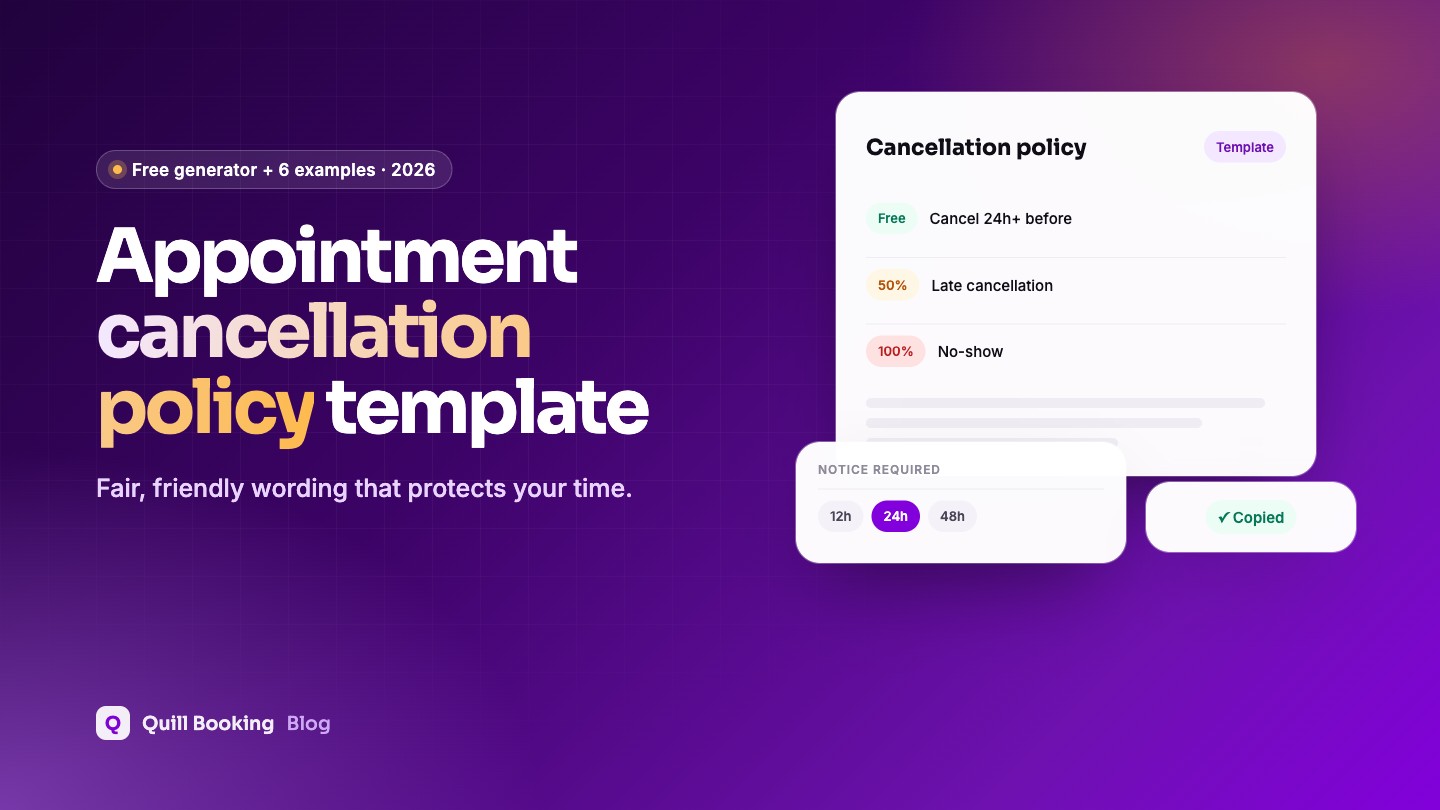
A good appointment cancellation policy says how much notice you need (usually 24 or 48 hours), what a late cancellation or no-show costs, how to cancel or reschedule, and when you make exceptions. Keep it short and friendly, show it before people book, and apply it the same way to everyone. Use the free generator below to create yours, or copy one of six ready-made examples.
A cancellation policy protects your time without scaring clients away. The best ones read like a fair agreement, not a list of penalties. They explain why notice matters, make cancelling easy, and set a clear consequence for people who do not show up.
Disclosure: We make Quill Booking, so we use it for the screenshots and examples. The advice works with most booking plugins and scheduling tools.
Key takeaways
- Most businesses ask for 24 hours’ notice; longer services and appointments that are hard to refill often ask for 48 hours.
- Common consequences range from a warning, to a partial fee for late cancellations, to the full price for no-shows. These are typical policy choices, not industry statistics.
- Show the policy on the booking page and in the confirmation email, and make the cancel and reschedule links easy to find.
- Healthcare and therapy have extra rules. For example, US practices may charge Medicare patients for missed appointments only under a policy that applies to all patients.
Free cancellation policy generator
Fill in the fields and copy your policy. It updates as you type.
Cancellation policy generator
Edit the fields, then click Copy.
What to include in a cancellation policy
- The notice period: how many hours before the appointment clients must cancel or reschedule.
- How to cancel: the link in the confirmation email, a phone number, or both.
- Late-cancellation terms: a fee, a forfeited deposit or a warning.
- No-show terms: usually stricter than late cancellations.
- Late arrivals: whether you shorten the session or treat it as a no-show after a set time.
- Deposits and refunds: when a deposit is refunded or kept.
- Exceptions: emergencies, illness or bad weather, and who decides.
- Agreement: a line saying that booking means accepting the policy.
24 or 48 hours: how much notice should you ask for?
Ask for the notice you need to refill the slot. If you can easily offer a freed-up appointment to someone else the next day, 24 hours is enough, and it is the most common choice. The American Psychological Association’s practice advice notes that a 24-hour notice is typical for therapy sessions (APA Services). For long, expensive or hard-to-fill appointments, such as colour treatments, photo shoots or multi-hour consultations, 48 hours or more is reasonable.
| Business type | Typical notice | Common approach |
|---|---|---|
| Hair, beauty and spa | 24 to 48 hours | Deposit for long services; fee for no-shows |
| Medical and dental | 24 hours | Reminder calls or texts; fee only if your rules and contracts allow |
| Therapy and counselling | 24 to 48 hours | Fee for late cancellations, agreed at the first session |
| Consultants and coaches | 24 hours | Prepaid sessions; one free reschedule |
| Fitness classes | 2 to 12 hours | Lose the class credit if cancelled late |
| Tutoring | 24 hours | Lesson charged if cancelled late |
6 cancellation policy examples to copy
We kindly ask for at least 24 hours' notice to cancel or reschedule your appointment. Cancellations with less than 24 hours' notice are charged 50% of the service price, and missed appointments are charged in full. For services over 2 hours, we take a deposit when you book, which is refunded if you cancel in time. You can manage your booking anytime using the link in your confirmation email.
If you cannot keep your appointment, please let us know at least 24 hours in advance so we can offer the time to another patient. You can cancel or reschedule online or by calling [phone]. Patients who miss [two] appointments without notice may be asked to [pay a missed-appointment fee of $X / book with a deposit]. This policy applies equally to all patients.
Your session time is reserved just for you. If you need to cancel or reschedule, please give at least 24 hours' notice. Sessions cancelled with less notice, or missed, are charged at the full session fee, which insurance usually does not cover. We will waive this fee for genuine emergencies.
You can reschedule any session free of charge up to 24 hours before it starts, using the link in your confirmation email. Sessions cancelled with less notice, or missed, count as used. If something urgent comes up, just let me know and we will find a fair solution.
Please cancel at least 12 hours before your class so someone on the waiting list can take your spot. Late cancellations and no-shows lose the class credit. Arriving more than 10 minutes late may mean we cannot let you join, for safety reasons.
Lessons can be rescheduled or cancelled free of charge with at least 24 hours' notice. Lessons cancelled with less notice, or missed, are charged in full. If I need to cancel, you will not be charged and we will find a new time together.
How to word your policy so it does not scare clients
- Explain the why. “Your time is reserved just for you” lands better than “Failure to comply will result in charges”.
- Lead with what clients can do. Start with free cancellations and rescheduling, then the fees.
- Be specific. “50% of the service price” is clearer than “a fee may apply”.
- Allow for emergencies. A line about fairness builds trust and costs you little.
- Keep it short. If it does not fit on a phone screen, trim it.
How to enforce your policy without awkward conversations
- Show it before people book. Put it in the event description, or add a required checkbox question such as “I agree to the cancellation policy”.
- Repeat it in the confirmation and reminder emails, with the reschedule and cancel links.
- Take deposits for high-value slots. A deposit enforces itself, and you do not need to chase anyone. See how to take payments for appointments.
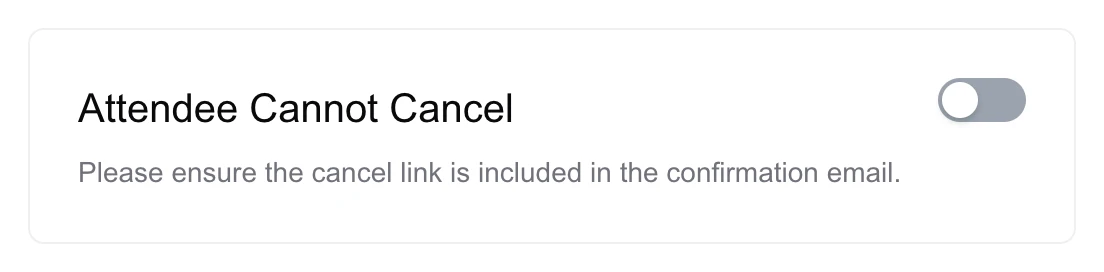
- Decide what clients may change online. In Quill Booking, each event’s Advanced Settings tab lets you stop attendees from cancelling or rescheduling online, so late changes come to you directly.
- Apply it consistently, and record every exception you make.
Special rules for healthcare and therapy
- Medicare (US): CMS allows providers to charge Medicare patients for missed appointments only if the policy applies equally to all patients and the amount is the same for Medicare and non-Medicare patients. The charge is billed to the patient, not to Medicare (CMS MLN Matters MM5613).
- Therapists: APA guidance is to explain missed-appointment charges and the amount as part of informed consent, before treatment starts.
- Insurance contracts and local regulations may limit or forbid fees. Check before you charge.
This article is general information, not legal advice.
Frequently asked questions
What is a fair cancellation policy for appointments?
Most businesses ask for 24 hours’ notice, allow free cancellations and rescheduling before that, and charge part of the price for late cancellations and the full price for no-shows. Longer or high-value appointments often ask for 48 hours or a deposit.
Can I charge a no-show fee?
Generally yes, if clients agreed to the policy before booking and you apply it consistently. Healthcare is stricter: in the US, Medicare patients can be charged only under a policy that applies equally to all patients, and insurer contracts may restrict fees.
Where should I display my cancellation policy?
On the booking page, ideally with a required checkbox, and again in the confirmation and reminder emails. Many businesses also add it to their website footer or FAQ page.
How do I tell a client they will be charged a cancellation fee?
Be friendly and factual: remind them of the policy they agreed to, state the amount, and offer to rebook. For example: “As per our 24-hour policy, a 50% fee applies to today’s late cancellation. Would you like to book a new time?”
Should I take a deposit instead of charging fees later?
For high-value or long appointments, a deposit is usually easier: it is collected up front, so you never have to chase payment after a no-show.
Related guides
- How to reduce no-shows
- 30 appointment reminder templates
- How to take payments for appointments in WordPress
Make cancelling easy and no-shows rareQuill Booking adds reschedule and cancel links to every confirmation. Pro adds deposits and SMS reminders.
See pricing